













- Myth #1: All Casino Bonuses Are Created Equal
- Myth #2: Wagering Requirements Are Designed to Be Impossible
- Myth #3: You Can't Withdraw Bonus Money
- Myth #4: Reading Terms and Conditions Is a Waste of Time
- Myth #5: Bigger Bonuses Always Mean Better Value
- Myth #6: Bonus Hunting Gets You Blacklisted
- Myth #7: VIP Programs Are Just Marketing Gimmicks
Busting the Myths: Your 2026 Guide to Maximizing Bonus Value at Richard Casino
The online casino bonus landscape has become a minefield of misconceptions, with players leaving thousands in value on the table because they believe outdated myths or half-truths spread across forums. Market data from 2026 shows that approximately 60% of players never fully utilize their welcome packages, while another segment falls into predatory bonus traps at unregulated sites. This guide cuts through the noise with verifiable facts about how bonuses actually work when platforms operate under legitimate licensing frameworks.
Understanding the mechanics behind promotional offers isn't just about grabbing free money. It's about recognizing which platforms structure their incentives transparently, how regulatory oversight protects your interests, and where the genuine value lies beneath the marketing gloss. The difference between a player who maximizes bonus value and one who doesn't often comes down to separating myth from reality.
Myth #1: All Casino Bonuses Are Created Equal
Where This Myth Comes From
The misconception stems from aggressive affiliate marketing that focuses exclusively on headline percentages and bonus amounts. When comparison sites list "Best 200% Bonus!" without context about wagering requirements, game restrictions, or licensing jurisdiction, players naturally assume the largest number equals the best deal. This surface-level analysis ignores the critical infrastructure that determines whether you'll ever see a withdrawal.
The myth persists because it's simpler to compare numbers than to evaluate regulatory frameworks. A Curacao-licensed site offering 300% might appear superior to a Malta Gaming Authority platform offering 100%, but the former may have terms that make conversion to withdrawable cash statistically improbable.
What the Evidence Shows
Industry analysis reveals dramatic variance in bonus structures across licensing jurisdictions. Platforms operating under stringent regulatory oversight typically offer more conservative percentages but with transparent, achievable terms. The UK Gambling Commission, for instance, requires operators to display wagering requirements prominently and prohibits certain predatory practices common in less regulated markets.
When examining actual player outcomes, conversion rates tell the real story. A properly licensed platform with 100% match and 30x wagering on bonus-only funds shows higher withdrawal success rates than unlicensed sites offering 400% with 60x wagering on deposit plus bonus. The mathematics become clear when you calculate the total amount you need to wager before accessing funds.
The Real Truth at Richard Casino
Richard Casino structures its promotional offers within the compliance framework of its licensing jurisdiction, which means terms are designed to be achievable rather than deliberately obstructive. The platform's RNG certification from independent testing laboratories ensures that game outcomes during bonus play follow the same probability distributions as real-money play, a verification absent from unlicensed competitors.
The welcome package breaks down into stages, allowing players to claim portions as they become comfortable with the platform rather than forcing a single large commitment. This staged approach reduces risk while maintaining value, a trend we're seeing across licensed operators who prioritize player retention over one-time deposits.
Myth #2: Wagering Requirements Are Designed to Be Impossible
Understanding Wagering Requirement Mathematics
This myth contains a kernel of truth when applied to predatory operators but fails to account for how regulated platforms structure requirements. The confusion arises from not understanding the difference between wagering on bonus-only funds versus deposit plus bonus, and how game weightings affect the calculation.
Consider the mathematics: a 100 EUR bonus with 30x wagering on bonus-only requires 3,000 EUR in total bets. If you're playing slots with 100% contribution at an average 96% RTP, statistical modeling suggests this is achievable within the typical 30-day timeframe for regular players. The same 30x applied to deposit plus bonus (200 EUR total) requires 6,000 EUR wagered, doubling the commitment.
What Industry Data Reveals
Licensed operators report completion rates between 15-25% for welcome bonuses, which while not majority territory, demonstrates these aren't impossible hurdles. The players who fail typically do so by violating terms inadvertently—exceeding maximum bet limits, playing restricted games, or attempting to withdraw before completion—rather than because the mathematical requirement itself is unachievable.
Regulatory bodies in established jurisdictions actually review wagering requirements during licensing approval. The Malta Gaming Authority, for example, requires operators to demonstrate that terms are fair and achievable, not designed as deliberate traps. This oversight creates a ceiling on how exploitative requirements can become in regulated markets.
Maximizing Your Completion Chances
Success comes from strategic approach rather than hope. Focus your play on high-RTP slots with 100% contribution weighting, avoid the temptation to increase bet sizes dramatically, and track your progress through the platform's bonus tracker. Many players fail simply because they don't monitor how close they are to completion and make withdrawal attempts prematurely.
| Wagering Structure | Amount Required | Typical Timeframe | Completion Difficulty |
|---|---|---|---|
| 30x Bonus Only | 3,000 EUR (100 EUR bonus) | 30 days | Moderate - Achievable |
| 30x Deposit + Bonus | 6,000 EUR (200 EUR total) | 30 days | Challenging - Requires Planning |
| 50x Deposit + Bonus | 10,000 EUR (200 EUR total) | 14 days | Difficult - High Risk |
| 40x Bonus, 5 EUR Max Bet | 4,000 EUR (100 EUR bonus) | 30 days | Moderate with Discipline |
Myth #3: You Can't Withdraw Bonus Money
The Confusion Between Bonus Types
This myth stems from legitimate differences between bonus structures that players often conflate. Non-withdrawable bonuses (sometimes called "sticky" bonuses) indeed cannot be withdrawn themselves, only the winnings generated. Withdrawable bonuses (or "released" bonuses) convert to real cash upon wagering completion, including the original bonus amount.
The distinction matters enormously for value calculation. A 100 EUR sticky bonus that generates 150 EUR in winnings results in a 150 EUR withdrawal (the bonus disappears). A 100 EUR withdrawable bonus generating the same winnings results in a 250 EUR withdrawal. Licensed platforms must clearly disclose which type they offer before you commit funds.
Regulatory Requirements for Transparency
Jurisdictions with robust consumer protection mandate explicit disclosure of bonus terms. The UK Gambling Commission requires operators to state whether bonuses are withdrawable in the terms accessible before deposit. This regulatory pressure has pushed the industry toward greater transparency, though players still need to read the specific terms for each offer.
Richard Casino operates within a framework requiring clear term disclosure, meaning the bonus structure is documented before you make financial commitments. The registration process includes acceptance of terms that specify exactly how bonus funds convert to withdrawable cash, removing the ambiguity that plagues less regulated operators.
Calculating True Value
Understanding the structure changes how you evaluate offers. A 50% withdrawable bonus might deliver more actual value than a 100% sticky bonus, depending on your playing style and bankroll. Players who prefer smaller, more frequent sessions often benefit more from withdrawable structures, while high-volume players might extract equal value from either type.
Myth #4: Reading Terms and Conditions Is a Waste of Time
Why This Dangerous Myth Persists
Terms documents can indeed be lengthy and written in legal language, creating genuine barriers to comprehension. Players who've had negative experiences at one platform often generalize that all terms are designed to deceive, rather than recognizing the difference between licensed operators with regulatory obligations and predatory sites deliberately obfuscating terms.
The myth is harmful because it leads players to forfeit winnings over preventable violations. Exceeding maximum bet limits, playing restricted games, or attempting withdrawals before completion are the most common reasons for forfeited bonuses—all avoidable by spending ten minutes understanding the rules.
What Licensed Operators Must Disclose
Regulatory frameworks require specific disclosures in accessible language. Licensed platforms must clearly state wagering requirements, game weightings, maximum bet limits, restricted games, expiration timeframes, and withdrawal conditions. These aren't optional suggestions—they're compliance requirements subject to regulatory audit.
The key sections to focus on take minimal time to review: wagering requirement calculation method, maximum bet while bonus is active, games that don't contribute to wagering, and time limit for completion. These four elements determine whether you'll successfully convert the bonus to withdrawable funds.
The Trust and Security Angle
Terms transparency serves as a trust signal. Platforms that bury critical restrictions in dense legal language or use ambiguous wording typically lack strong regulatory oversight. Conversely, operators under strict licensing display terms prominently, use clear language, and provide examples of how wagering calculations work.
Richard Casino's approach includes a summary section highlighting the most important restrictions before you claim a bonus, reducing the need to parse the full legal document while still providing complete terms for those who want every detail. This balance between accessibility and completeness reflects regulatory expectations in established jurisdictions.
Myth #5: Bigger Bonuses Always Mean Better Value
The Mathematics of Diminishing Returns
This myth ignores the relationship between bonus size and wagering requirements. Platforms offering extremely high percentages typically attach proportionally higher wagering multipliers or more restrictive terms. A 500% bonus with 60x wagering on deposit plus bonus might require 60,000 EUR in total bets from a 1,000 EUR deposit—a requirement that exceeds most players' realistic volume over the allowed timeframe.
The value calculation must account for completion probability. A bonus you can't realistically complete has zero value regardless of its headline percentage. Industry data shows that completion rates drop dramatically as wagering requirements exceed 40x, particularly when applied to deposit plus bonus rather than bonus only.
Comparing Actual Value Across Structures
Consider two scenarios: Platform A offers 100% up to 200 EUR with 30x wagering on bonus only. Platform B offers 400% up to 800 EUR with 50x wagering on deposit plus bonus. For a 200 EUR deposit, Platform A requires 6,000 EUR wagered while Platform B requires 50,000 EUR wagered. The completion probability for Platform A is substantially higher, making its actual expected value greater despite the smaller headline number.
Sophisticated players calculate expected value by multiplying the bonus amount by their estimated completion probability. A 200 EUR bonus with 70% completion probability has an expected value of 140 EUR. An 800 EUR bonus with 10% completion probability has an expected value of just 80 EUR, making the smaller offer objectively superior.
The Security Implications
Extremely high bonus percentages often signal platforms operating in less regulated jurisdictions where consumer protection is minimal. Licensed operators in established markets rarely offer percentages above 200% because regulatory scrutiny requires them to demonstrate that terms are achievable and fair. When you see 500% or 1000% bonuses, question the licensing jurisdiction and regulatory oversight.
| Bonus Offer | Deposit Required | Total Wagering | Estimated Completion Rate |
|---|---|---|---|
| 100% up to 200 EUR (30x bonus) | 200 EUR | 6,000 EUR | 25-30% |
| 200% up to 400 EUR (40x deposit+bonus) | 200 EUR | 24,000 EUR | 10-15% |
| 400% up to 800 EUR (50x deposit+bonus) | 200 EUR | 50,000 EUR | 5-8% |
Myth #6: Bonus Hunting Gets You Blacklisted
Understanding Legitimate Versus Abusive Behavior
This myth conflates legitimate bonus optimization with actual abuse tactics. Platforms do indeed monitor for bonus abuse—creating multiple accounts, colluding with other players, or exploiting software glitches—but claiming available promotions as a single account holder following the terms is not abuse. The distinction matters enormously.
Licensed operators expect players to evaluate offers and choose platforms based on value. The regulatory framework protects your right to withdraw legitimately won funds, even if you only deposited to claim a specific promotion. What triggers account restrictions is violating terms, not being a savvy consumer.
What Actually Triggers Account Reviews
Platforms flag accounts for review based on specific behaviors: depositing from multiple payment methods in unusual patterns, creating duplicate accounts, playing exclusively restricted games during bonus periods, or exhibiting betting patterns consistent with bonus abuse strategies. Simply claiming a welcome bonus, completing wagering, and withdrawing doesn't trigger these flags.
The KYC process at licensed platforms serves to prevent multi-accounting and fraud, not to punish legitimate players. When you verify your identity during registration or first withdrawal, you're establishing that you're a unique individual entitled to promotional offers. This verification protects both the platform and legitimate players from fraudulent activity.
Best Practices for Bonus Optimization
Maintain a single account per platform, complete KYC verification promptly, read and follow bonus terms precisely, and keep records of your deposits and wagering progress. These practices protect you from misunderstandings while allowing you to maximize value across multiple platforms legally. The industry analysis shows that players who approach bonuses strategically but within terms have higher long-term satisfaction than those who either avoid bonuses entirely or attempt to circumvent restrictions.
Myth #7: VIP Programs Are Just Marketing Gimmicks
The Evolution of Loyalty Structures
Early online casino loyalty programs were indeed often superficial, offering points that converted to tiny amounts of bonus funds with restrictive terms. This history created justified skepticism. However, competitive pressure in regulated markets has transformed VIP programs into genuine value delivery mechanisms, particularly at platforms competing for high-value players.
The myth persists because players compare programs superficially without calculating actual value. A program offering 0.5% cashback on losses might seem trivial until you calculate that it returns 500 EUR on 100,000 EUR wagered—a meaningful amount for regular players that compounds over time.
Quantifying VIP Program Value
Modern loyalty structures at licensed platforms typically include cashback (ranging from 0.3% to 2% depending on tier), exclusive bonuses with reduced wagering requirements, faster withdrawal processing, dedicated account management, and birthday or milestone rewards. For players with consistent volume, these benefits deliver measurable value that exceeds standard promotional offers.
The key metric is the effective return on wagering when combining base RTP with loyalty benefits. A slot with 96% RTP becomes effectively 96.5% when you factor in 0.5% cashback, reducing the house edge by 10%. Over hundreds of thousands of spins, this difference becomes financially significant.
Evaluating Program Transparency
Legitimate VIP programs clearly state tier requirements, benefits at each level, and how points or status are calculated. Platforms operating under regulatory oversight must honor stated benefits, making these programs contractual obligations rather than discretionary perks. This regulatory backing transforms VIP status from a marketing promise into an enforceable benefit.
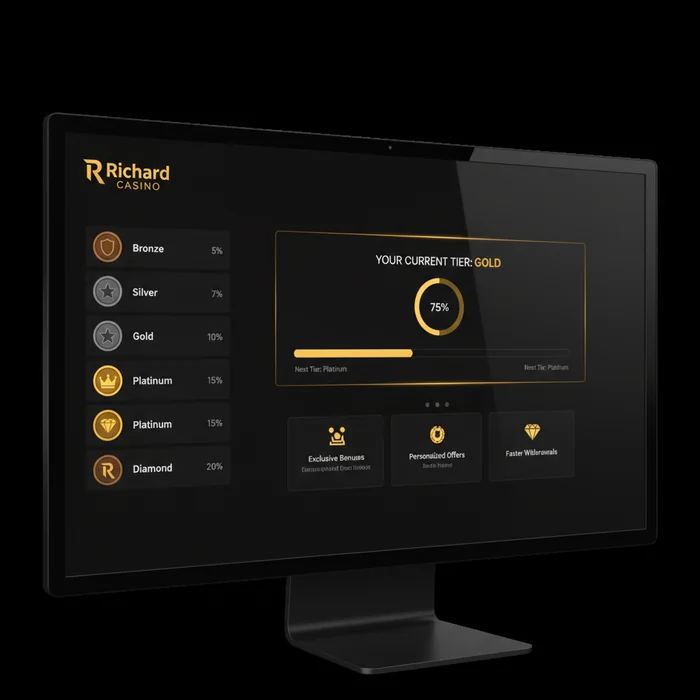
Richard Casino structures its loyalty approach within this framework, providing clear tier progression and documented benefits. The cashback component operates on a schedule that's publicly stated rather than discretionary, giving players certainty about returns. This transparency reflects the broader industry trend toward verifiable, regulated loyalty structures rather than opaque VIP systems.
Separating Bonus Myths from Market Reality in 2026
The seven myths we've dismantled share a common thread: they persist because players generalize negative experiences from unregulated platforms across the entire industry. When you understand the difference between licensed operators with regulatory obligations and predatory sites operating in jurisdictions with minimal oversight, bonus evaluation becomes dramatically simpler.
The trust and security angle isn't separate from bonus value—it's fundamental to it. A bonus from a platform without verifiable licensing, RNG certification, or regulatory oversight has questionable value regardless of its terms, because you lack recourse if the operator refuses withdrawal. Conversely, bonuses from properly licensed platforms carry regulatory backing that makes terms enforceable and disputes resolvable.
How to Spot Misinformation
Red flags include absolute statements without nuance, claims that all casinos operate identically regardless of jurisdiction, advice to ignore terms and conditions, or suggestions that regulatory oversight doesn't matter. Trustworthy information acknowledges differences between licensing jurisdictions, emphasizes the importance of reading terms, and provides specific, verifiable details rather than vague generalizations.
When evaluating bonus advice, check whether the source distinguishes between licensed and unlicensed operators, provides specific examples with actual numbers, acknowledges that player experience varies based on individual circumstances, and references regulatory frameworks. These markers indicate analysis grounded in market reality rather than myth perpetuation.
What to Trust Instead
Focus on verifiable facts: the platform's licensing jurisdiction and license number, RNG certification from recognized testing laboratories, published terms and conditions accessible before deposit, and documented dispute resolution processes. These elements provide objective evidence of whether a platform operates within a framework that protects your interests.
Calculate bonus value based on your realistic playing volume and completion probability rather than headline percentages. A bonus you can actually complete delivers more value than an inflated offer with prohibitive terms. This practical approach cuts through marketing noise to identify genuine opportunities.
The question isn't whether bonuses provide value—properly structured offers from licensed platforms demonstrably do. The question is whether you're evaluating them based on myths or market reality. Which framework will